
ISB&M Pune Faculty: Connecting Academic Depth with Industry Experience
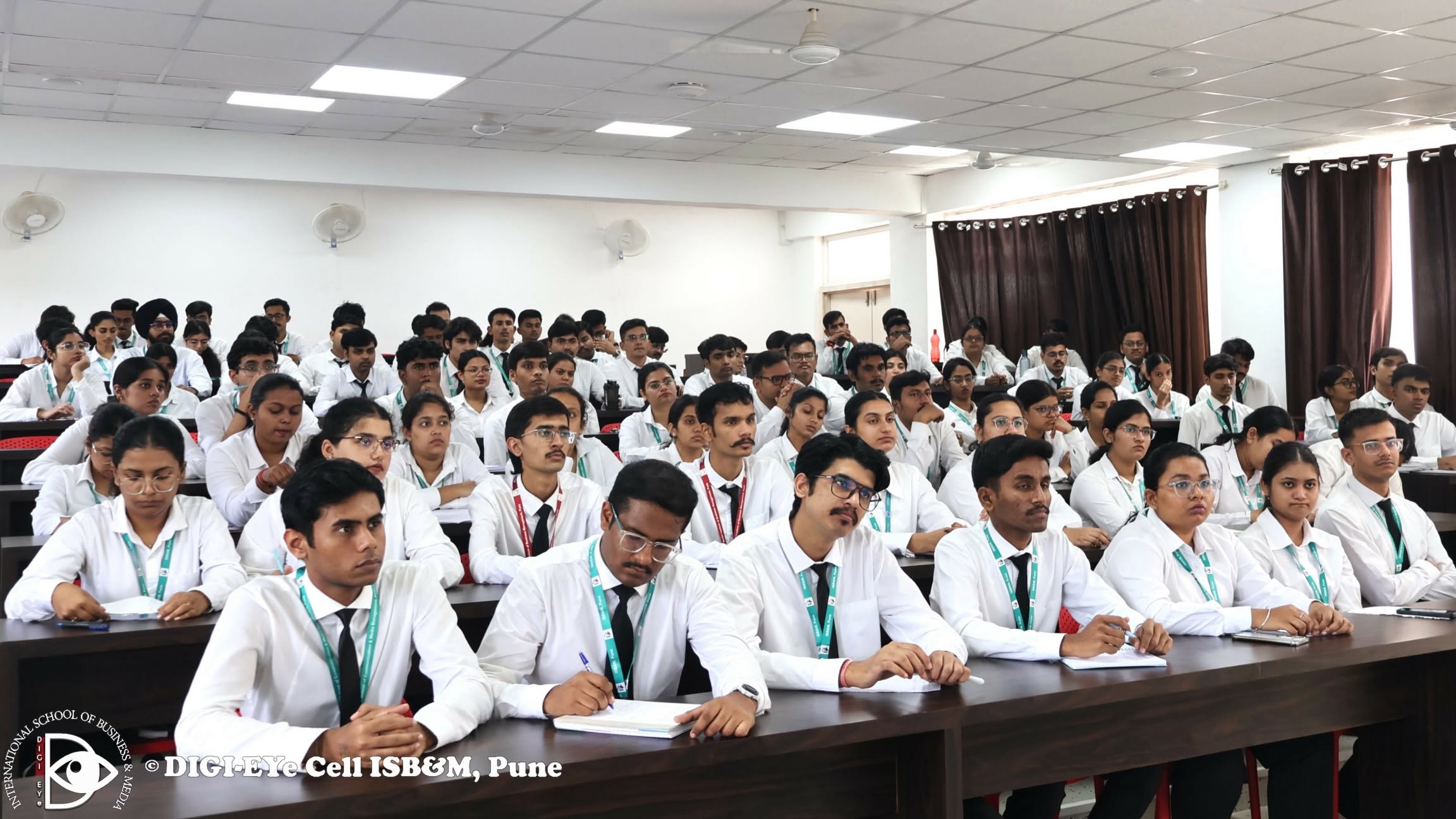
The ISB&M faculty approach combines academic expertise, research and professional experience to connect management concepts with organisational decisions. Cases, projects, simulations, mentoring and Guided Self-Study provide opportunities for students to examine those connections in practice.
A qualification tells you what someone has studied. A classroom reveals how effectively they can help others think.
For a prospective PGDM student, faculty evaluation should therefore go beyond institutional names and years of experience. The more important questions concern teaching, evidence, application and feedback.
At International School of Business & Media (ISB&M), Nande, Pune, Maharashtra, the faculty model described in the institutional material brings academic preparation and industry experience into the same learning environment.
Key takeaways
- Academic expertise and industry experience contribute different perspectives to management learning.
- Faculty profiles are most useful when connected with courses, research and teaching responsibilities.
- Mentoring, feedback and Guided Self-Study help students take greater ownership of their development.
Why should students examine faculty before choosing a PGDM?
Faculty influence how students understand concepts, evaluate evidence and develop independent judgement.
A course title alone reveals little about the classroom experience. Two courses called Marketing can differ substantially in their cases, assignments, discussions and feedback.
Students should examine who teaches the course, what expertise they bring and how they connect theory with application. Research experience can strengthen the questioning of evidence. Professional experience can introduce organisational constraints and implementation challenges.
Neither an impressive qualification nor a senior corporate designation automatically explains teaching quality. Applicants should look for the connection between a faculty member’s background and the learning students receive.
ISB&M’s faculty feature emphasises this relationship through academic expertise, industry perspectives and practical teaching methods.
How do academic and corporate backgrounds contribute to learning?
Academic depth helps students understand and test ideas, while corporate experience helps them examine decisions in their organisational context.
ISB&M was founded in 2000 by Dr. Pramod Kumar. The supplied profile identifies his PhD in Organisational Behaviour from IIT Bombay and earlier associations with IIM Ahmedabad, XLRI and SIBM Pune.
The faculty material also highlights educators with backgrounds associated with institutions including IITs, IIMs, XLRI, SPJIMR and TISS, alongside professionals with industry experience. These relationships should be understood through individual profiles, not treated as identical qualifications.
The examples in the institutional feature illustrate different combinations of expertise:
| Faculty profile highlighted | Academic or professional foundation | Experience |
|---|---|---|
| Dr. Prasanta Kumar De | PhD from IIT Kharagpur and postdoctoral research | Academic leadership, industry work and consulting |
| Prof. S. B. Subramaniam | Fellow Chartered Accountant | Senior finance responsibilities, including CFO and finance leadership roles |
| Dr. Subramaniam Jayaraman | Management education at IIM Calcutta | Experience across industries and functions, alongside teaching in HR and organisational behaviour |
These examples show different routes through which educators can connect concepts with practice. They should be read alongside verified teaching responsibilities and current campus associations. Pasted markdown
What does this combination look like in the classroom?
It should appear in the questions asked, the evidence examined and the decisions students are required to defend.
A finance discussion, for instance, can connect financial statements with operating constraints. An organisational behaviour case can examine both a theoretical explanation and the practical difficulty of changing behaviour.
The teaching methods described at ISB&M include cases, business simulations, group projects, company assignments and continuous feedback. These methods create opportunities to test understanding rather than simply reproduce definitions.
A useful classroom discussion does not end when a student identifies a framework. It moves towards application: What does the framework explain? What does it overlook? What should the organisation do?
Faculty contribution becomes especially valuable when students must consider competing alternatives. The purpose is not to provide a preferred answer to every problem, but to help students develop a defensible reasoning process.
What is Guided Self-Study, and why does it matter?
Guided Self-Study is a faculty-approved mechanism for exploring selected themes in greater depth through supervised independent learning.
The institutional description presents GSS as an opportunity to strengthen conceptual understanding, articulate ideas independently and complete agreed assessments. It is not described as an unrestricted substitute for regular coursework. Pasted markdown
For students, the important distinction is between studying alone and learning independently with direction.
A meaningful GSS assignment needs a defined question, suitable reading or evidence, an agreed output and faculty feedback. Students take responsibility for their learning while retaining access to academic guidance.
This approach can support curiosity beyond a standard classroom discussion. It also encourages students to explain what they have learnt in their own words—a useful test of understanding.
Applicants should ask how GSS is approved, supervised and evaluated within the current programme.
How does faculty involvement extend beyond lectures?
Faculty involvement extends into mentoring, career planning, internship monitoring and dissertation guidance.
The supplied feature describes these responsibilities as part of the broader learning model. Faculty help students connect functional knowledge with analysis, communication, leadership and adaptation to changing business conditions.
For a student choosing between specialisations, that guidance can help clarify interests and expectations. During a project, it can improve problem definition. During dissertation work, it can strengthen the evaluation of evidence.
Applicants comparing top B-schools in Pune should therefore read the faculty profiles alongside the curriculum.
The central question is not only, “Where did the faculty study or work?” It is, “How will their expertise help me become a better management thinker?”
Frequently asked questions
What should I look for in a business-school faculty profile?
Look for qualifications, the exact institutions involved, current teaching areas, research interests and relevant professional experience. Also examine selected publications and the faculty member’s role in the programme. A detailed profile is more informative than a broad claim that all faculty come from leading institutions.
Is industry experience more important than academic research?
They serve different purposes and should not be treated as substitutes. Research can deepen conceptual understanding and evidence evaluation. Industry experience can clarify practical constraints and execution. Students should examine how both contribute to the courses, assignments and discussions relevant to their intended specialisation.
Can every ISB&M student automatically take Guided Self-Study?
The supplied programme description presents Guided Self-Study as faculty-approved, not automatic or unrestricted. Students should confirm the current approval process, academic requirements, supervision and assessment arrangements. Its purpose is deeper exploration of an agreed theme while maintaining academic guidance and responsibility for the learning output.
How can mentoring help during a PGDM?
Mentoring can help students reflect on academic choices, project challenges, internship learning and career interests. The supplied ISB&M feature describes faculty involvement in these areas. Its value depends on clear expectations, student preparation and follow-through; mentoring supports decisions rather than guaranteeing a particular career outcome.
Explore your next step: Meet the faculty, examine the programme and ask how teaching connects with your interests.