How Does ISB&M Pune Prepare PGDM Students for Corporate Careers?
Corporate readiness at ISB&M Pune is developed through applied coursework, company-based projects, internships, industry interaction and student-led responsibilities. The objective is to help students practise business analysis, communication, collaboration and execution before they enter professional roles.
A placement interview may last half an hour. Preparing to contribute in an organisation takes considerably longer.
For a student choosing a PGDM, the important question is therefore not only, “Which companies recruit here?” It is also, “What opportunities will I have to practise the work those companies expect?”
At International School of Business & Media (ISB&M), Nande, Pune, Maharashtra, industry engagement is presented as a continuing part of management learning—not an activity reserved for placement season.
Key takeaways
- Corporate preparation combines academic learning with opportunities to apply it.
- Student-led responsibilities, projects and internships develop different aspects of professional capability.
- Applicants should examine the quality of learning experiences, not rely only on headline placement figures.
What does corporate readiness mean during a PGDM?
Corporate readiness means being able to apply knowledge, work with others and take responsibility for a professional task. It requires more than familiarity with management terminology.
A student may understand segmentation but still need practice identifying a useful customer group. Similarly, knowing a financial framework differs from explaining its implications to a manager.
The transition happens through repeated application. Students must learn to define a problem, examine information, compare alternatives and communicate a recommendation.
ISB&M’s approach brings together functional learning and practical exposure. Company assignments, case discussions, industry workshops and internships provide different settings in which students can develop these abilities.
Readiness should not be interpreted as knowing everything on the first day of employment. A more useful goal is entering the workplace with sound foundations, professional discipline and the ability to learn.
How do student-led activities develop management capability?
Student-led activities create opportunities to practise coordination, planning, communication and ownership alongside formal coursework.
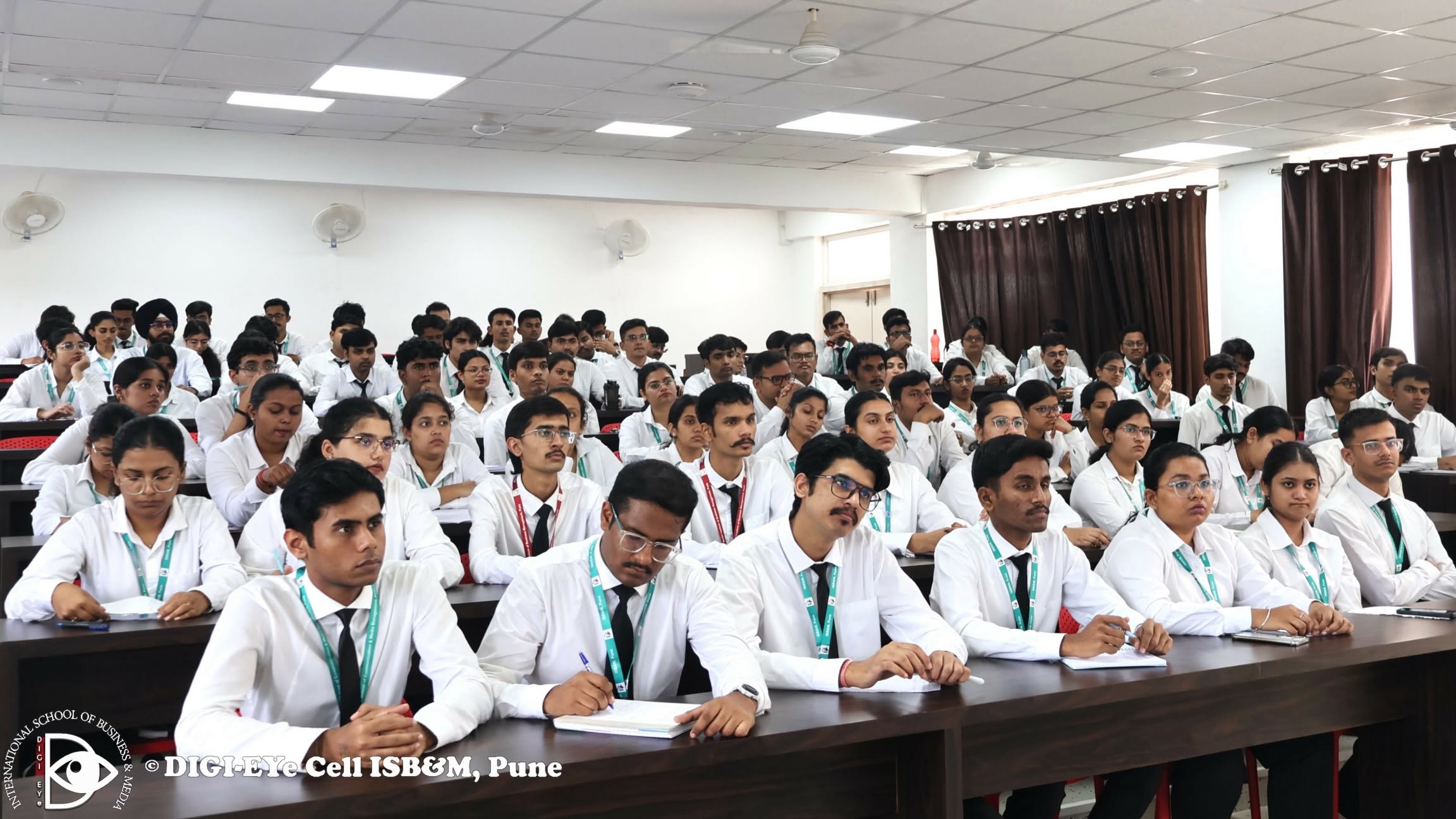
The supplied institutional feature describes students participating in the Corporate Relations Cell, organising professional interactions and coordinating with industry partners. These responsibilities connect classroom ideas with practical execution.
An industry event, for example, requires more than inviting speakers. Students must coordinate schedules, communicate clearly, organise resources and respond when plans change.
Events such as HR Share, Cresendo and Forza provide settings for these responsibilities. HR Share also brings business discussions into the student experience, including questions about technology, people and the future of work.
The educational value lies in the work involved: allocating responsibilities, managing dependencies and delivering an agreed outcome. These activities should complement academic learning rather than substitute for it.
How do projects and internships connect theory with practice?
Projects and internships give students opportunities to apply management concepts to organisational questions and professional expectations.
A classroom case provides a defined situation. A company project may require students to identify the problem before proposing a solution.
ISB&M’s programme description includes company-based projects, continuing case analysis and a summer internship after the third academic term. Workshops led by practising executives add perspectives on how organisations operate.
The different experiences serve complementary purposes:
| Learning experience | What students practise | What an applicant should examine |
|---|---|---|
| Case discussions | Diagnosing a situation and defending a decision | Whether discussions require evidence and alternatives |
| Company-based projects | Applying concepts to an organisational problem | The project brief, supervision and expected output |
| Summer internship | Working within professional processes and expectations | Role quality, feedback and learning responsibilities |
| Industry workshops | Understanding contemporary business practice | Relevance to courses and opportunities for interaction |
| Student-led activities | Coordinating people, resources and deadlines | The responsibilities students actually undertake |
The strongest project is not necessarily the one with the most impressive company name. Its value depends on the problem addressed, the student’s contribution and the quality of feedback.
Students should leave these experiences able to explain what they did, why they did it and what they learnt.
How do dual specialisation and assessment support this preparation?
Dual specialisation develops knowledge across two management areas, while continuing assessment creates opportunities to test understanding throughout the programme.
The programme description connects dual specialisation with modular courses, cases, simulations, projects and assignments. This is intended to help students understand business across functional boundaries.
For example, a marketing recommendation may have implications for pricing, inventory and profitability. An operational decision may affect service quality and customer retention.
Learning to recognise these connections matters alongside specialist knowledge. Students should be able to explain how a recommendation affects the wider business.
Continuing assessment also gives students more than one opportunity to demonstrate progress. A presentation tests communication; a case tests judgement; a project tests application. Their value increases when feedback helps students improve their next attempt.
Applicants should examine the current PGDM programme structure and confirm available specialisation combinations with Admissions.
What should students look for before choosing a career-focused PGDM?
Students should look for evidence of meaningful responsibility, supervised application and constructive feedback.
Ask to understand an actual project, internship assignment or classroom case. Find out what students were expected to produce and how their work was assessed.
Similarly, when examining placement information, look at the reporting year, campus coverage, roles offered and the population represented. A headline salary cannot explain the complete learning experience.
For students comparing top B-schools in Pune, ISB&M’s applied-learning approach provides a useful basis for further questions.
Corporate preparation is built through practice: analysing an unfamiliar problem, presenting a recommendation, working with others and learning from feedback. The aim is to make the transition into professional life more informed and purposeful—not to suggest that learning ends at graduation.
Frequently asked questions
Does corporate readiness mean a guaranteed placement?
No. Corporate readiness describes the development of knowledge, skills and professional behaviour; it is not a placement guarantee. Students should assess programme preparation separately from recruitment outcomes. Any published placement claim should identify its batch, campus coverage, reporting period and the students included in the calculation.
What is the role of a summer internship in the PGDM?
A summer internship allows students to experience an organisation’s expectations, processes and working relationships. It connects classroom learning with professional assignments and helps students examine their interests. Applicants should ask about project responsibilities, supervision, evaluation and feedback, rather than judging an internship only by its stipend.
How can student committees support management learning?
Student committees can develop practical capability when members take genuine responsibility for planning, communication, budgets and execution. Their value depends on the work students undertake and the feedback they receive. Participation is most useful when students can explain their contribution, decisions and learning.
What should I ask about live projects before applying?
Ask what business problem the project addresses, who supervises it, what information students receive and how the output is evaluated. Request an example of a completed assignment. This helps distinguish meaningful applied learning from an activity described as a project without clear responsibilities or outcomes.
Explore your next step: Review the programme, speak to Admissions and examine the learning opportunities that match your goals.